

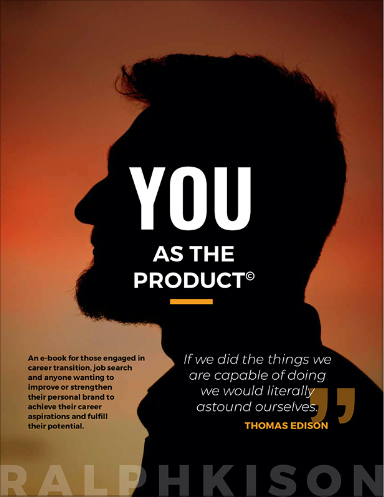
If you’ve worked with me before, as a recruiter, coach, or in a workshop, you’ve probably heard me say this: “YOU are the product.”
That’s not about turning yourself into something fake. It’s about seeing your career more objectively:
- What real value do you bring?
- Who benefits from what you do?
- What measurable impact do you deliver?
- How do you show up consistently?
It’s also about viewing yourself as your personal brand or product manager.
For over 35 years, I’ve helped candidates, leaders, and professionals see themselves this way. Once they do, something important often happens:
- They recognize their strengths more clearly
- They own their accomplishments without feeling like they’re bragging
- They identify real growth areas instead of vague self-criticism
- They show up in interviews and client meetings more confident and more authentic
- They minimize or overcome the imposter syndrome
This is especially powerful for people in fields like finance, engineering, architecture, construction, technology, and, more recently, health care professionals, who often prefer to talk about the project, file, or issue instead of themselves. In some cases, they’d rather talk about anything than their own contribution. These are generally highly educated and experienced individuals.
In today’s competitive market (and digital world), that’s a missed opportunity.
Let’s walk through a few “service and product development” strategies you can use to build your personal brand in a real, grounded way.
1. Be Authentic: Start With an Honest Assessment
Before you polish your brand, you need to understand the real you.
Ask yourself:
- What do I do best, consistently?
- Where do people already trust me?
- What do others come to me for help with?
- What’s my “why,” and how do I live and make decisions based on it?
If this feels hard, invite a trusted colleague, mentor, or friend to share their perspective:
“When you see me at my best, what do you notice? What do you think are my top 3 strengths and talents?”
The key here is to listen with an open mind. You might hear things you’ve been downplaying or blind spots you’ve been avoiding. Both are useful. Authenticity isn’t about telling the world everything. It’s about making sure what you do share is true, lived, and aligned with how you behave and anchored in your core values.
2. Define Your Core Values: What Do You Stand For?
Your core values are the internal, deep-seated principles and beliefs that guide your decisions and behaviours, especially under pressure.
They shape:
- What you say “yes” and “no” to
- How you treat colleagues, clients, partners and people in general
- How you lead when things go wrong
- How you don’t make excuses or duck out when things get tough
A few prompts:
- “What behaviours do I respect most in others?”
- “What behaviours frustrate me the most—and why?”
- “When I’m proudest of my work, what values am I living out?”
What may help you get clarity is to capture 3–5 values in your own words. Keep them practical, not just inspirational:
- “I own my mistakes and fix them.”
- “I tell the truth, even when it’s uncomfortable.”
- “I do what I say I’ll do.”
And remember: people pay more attention to what you do and how well you do it than what you say your values are. This is one area where the saying “talk is cheap” certainly applies.
3. Reframe How You See Yourself: From “Employee” to “Owned Product”
Instead of thinking, “I’m just an employee with a job title,” try this:
“I own this product called Me Inc. I’m responsible for developing, sustaining, and making it valuable.”
Ask yourself:
- What do I do that is genuinely valuable and has a positive impact on others?
- What am I most proud of from the last 6–12 months, 1 year, 3-5 years?
- Where have I made a meaningful difference for my employer, team, clients, and even family and friends?
Capture specific examples:
- A problem you solved
- A client you helped retain
- A process you improved
- A conflict you helped resolved
- A neighbor or child you assisted, it’s fine to move outside the work realm
When you prepare your list, it’s not about bragging. It’s data about “your” services, skills or “products’” performance.
4. Define Your Value Proposition: Why You, Not Just Someone Like You?
Your value proposition is the answer to:
“Why should a client, employer, or team leader choose you?”
Think beyond technical skills and core competencies. Those are the price of admission and table stakes. What makes you different and valuable are often your “human and soft” skills:
- Your passion for client satisfaction
- Your ability to calm a tense room
- Your reliability under pressure
- Your knack for making complex ideas clear
- The way you respect and treat people regardless of their title or position
You might frame it like this:
“I help [type of team or client] achieve [specific outcomes] by [how you do it, including your soft skills].”
Example:
“I help project teams deliver smoother, lower-stress projects by translating complex technical issues into clear, actionable decisions for clients and creating a strong team culture.”
Your value proposition is a lot like your reputation; it’s what people say about you after you leave the room. The difference is: when you name it clearly, you can intentionally grow it and communicate it.
5. Study Leading Brands: What Can You Borrow (Without Becoming Fake)?
Think about global brands like Apple, Coke, Lexus, or your favorite professional service firm:
- They’re clear about what they stand for
- They look and feel consistent across touchpoints
- You know what to expect when you engage or deal with them
Do a quick exercise:
- What do you want people to expect when they work with you?
- What “signature experiences” do you provide? (Preparedness, calm, responsiveness, clarity, humour, straight talk, etc.)
- What would your colleagues or clients say is your single greatest strength?
You’re not trying to become Apple. You’re trying to become a clearer version of you—with your own distinctive “brand features.”
6. Be Consistent: Your Brand Is Built in the Small Moments
Nothing confuses people and weakens a personal brand more than inconsistent behaviour.
If you say you value communication but disappear for days without replying… If you say you care about quality but rush and cut corners… If you say people matter but only show up when you need something…
Brand and trust both erode.
Everything you do (or don’t do) sends a message:
- How you respond to emails
- How you handle mistakes
- How you talk about colleagues when they’re not in the room
- How you show up in meetings, prepared or winging it
- How you develop a professional appearance, attitude, and manners
I often call this your “life signature.” It’s the pattern people come to expect from you.
The goal isn’t perfection. It’s consistency and alignment: what you say you stand for, what you want to be known for, and how you actually behave.
Pulling It Together: Preparing to “Market” Your Brand
Before your next performance review, interview, or client meeting, take 15–20 minutes to prepare:
- Clarify 3–5 strengths you want to highlight, tied to real examples.
- Name your value proposition in one or two sentences.
- Choose one story that illustrates how you’ve made a difference in the last 6–12 months.
- Decide how you want people to feel after interacting with you (reassured, energized, confident, clearer, etc.) and show up accordingly.
You’re not “selling yourself” in a superficial way. You’re giving people a clear, honest picture of the product they’re considering investing in.
Remember:
YOU are the product.
You own it. You develop it. And you decide how intentionally you’ll build your brand this year.
Recent Comments